
Hardwood flooring concerns
Hardwood Floor Inspection in Northern California
Persistent gaps, seasonal spacing, cupping, crowning, checking, splits, finish concerns, and moving boards can look similar while involving different conditions. A hardwood floor inspection documents the pattern and surrounding context before the floor is altered.
Scope, travel, and scheduling are confirmed after we review the request.
On this page
Wood movement needs context
Wood flooring responds to moisture and environmental conditions, but a useful assessment also considers the product, board dimensions, installation method, room pattern, HVAC history, transitions, and project records. The inspection records representative measurements and distinguishes current observations from the history provided by others.
4 useful checks in a hardwood floor inspection
The scope is confirmed before scheduling and tailored to the assignment and accessible conditions at the property.
Gap and board pattern
Representative widths, locations, direction, repetition, and affected versus comparison areas.
Wood and finish condition
Visible checking, splits, cupping, crowning, edge damage, movement, and surface change.
Moisture context
Accessible flooring and ambient measurements selected for the assignment.
Installation and records
Flooring type, board dimensions, transitions, perimeter conditions, invoices, and product instructions.
Photographs from actual inspections
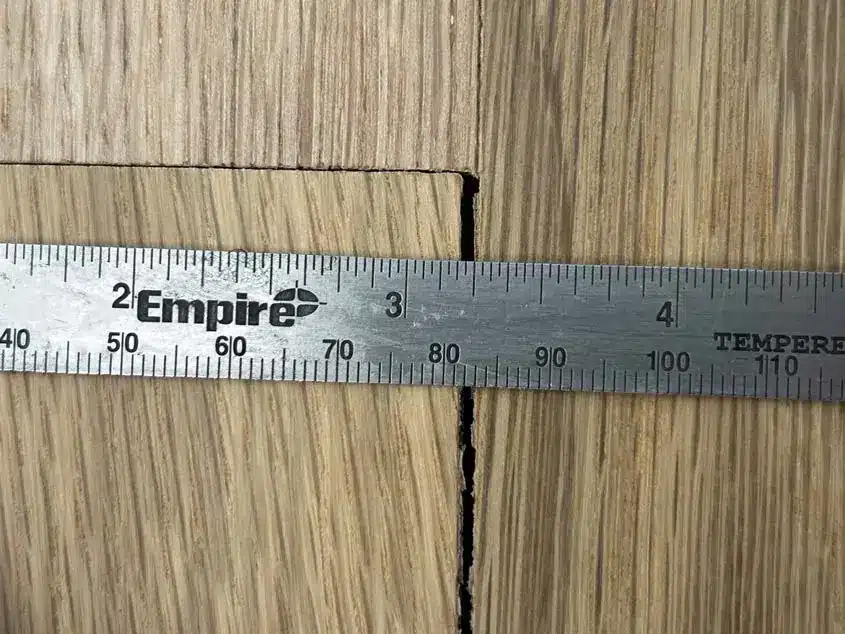
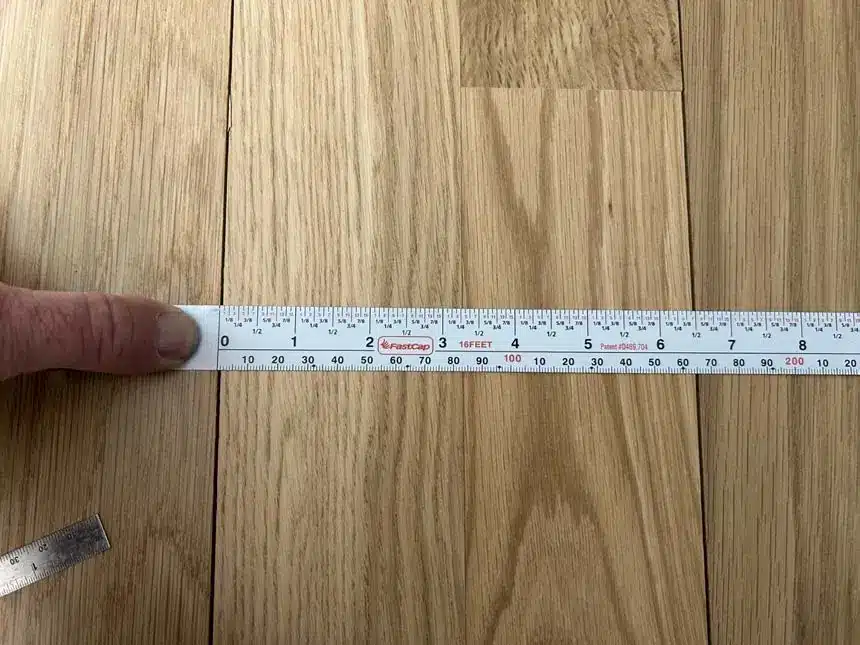
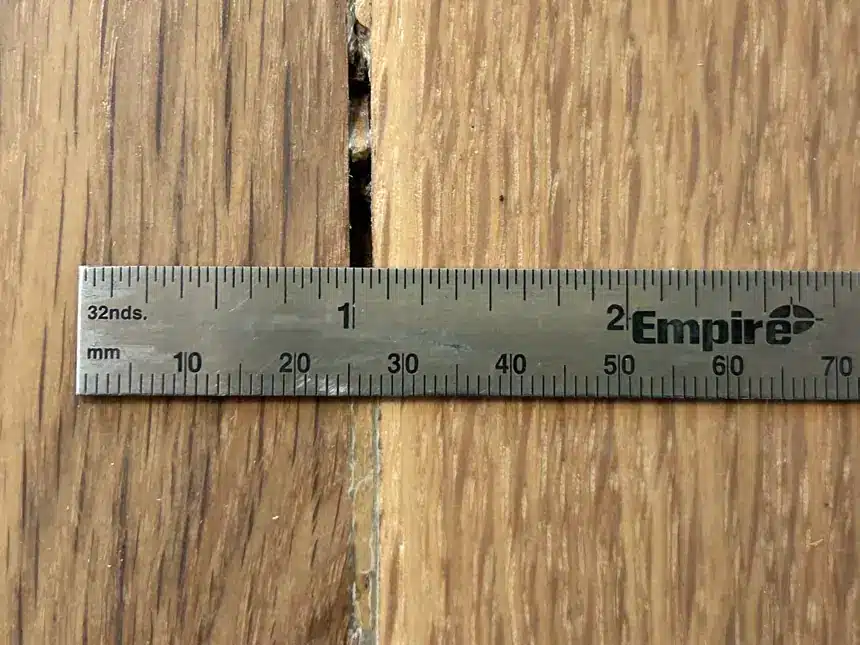
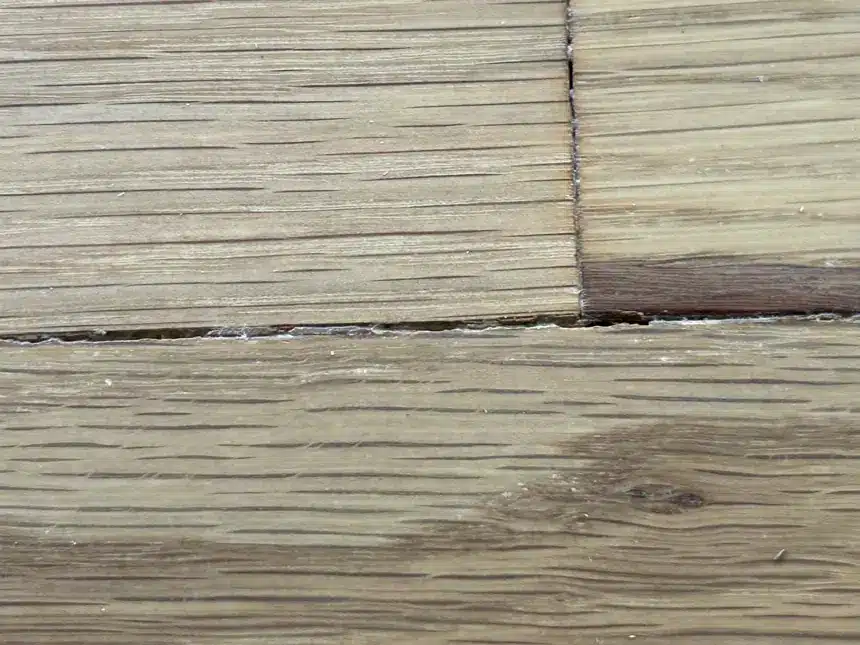
Each photograph belongs to an inspection record. Wider views, location information, measurements, and the surrounding conditions provide the context for the detail.
Prepare for the inspection
Before the hardwood inspection
Record when the flooring was installed, when the concern first appeared, whether it changes by season, and which rooms are involved. Keep normal HVAC operation and avoid filling gaps, sanding, refinishing, or removing boards solely to prepare for the inspection.
Records that add useful context
Provide the product name, wood species if documented, solid or engineered construction, board dimensions, installation method, purchase and installation invoices, maintenance records, and any indoor humidity history. If facts are unknown, leave them unresolved rather than guessing.
How the report helps
The report combines representative field measurements, labeled photographs, visible board and finish conditions, environmental observations, project history, and stated limitations. It gives everyone reviewing the concern the same organized evidence.
Common questions
Are gaps in hardwood flooring always a defect?
No. Some wood floors change dimension as conditions change. The size, distribution, timing, product, installation, and site conditions provide necessary context.
When should hardwood gaps be inspected?
Inspect while the concern is visible and before repair changes the floor. Dated photographs from other seasons can also help document change over time.
Does the inspection include moisture measurements?
When relevant and accessible, representative ambient and material measurements may be included within the agreed scope and stated limitations.
How is a hardwood floor inspection scoped?
The property address, visible concern, flooring details, records, access, and travel are reviewed before pricing and scheduling are confirmed.
Tell me what is happening with the floor
Start with your contact details, the property location, and a short description of the concern. I will review the information before confirming the next step.
Call (916) 313-9224
dcraig@flooringspecialists.biz
By submitting, you ask us to contact you about this request. Privacy policy.
Submitting a request does not confirm an appointment or expert engagement. We use your information to respond to your inquiry.
Useful records and related resources
For a hardwood floor inspection, keep any dated humidity records and photographs from earlier seasons with the project documents. A measurement taken during the visit describes the conditions at that time. It does not, by itself, establish the humidity or moisture conditions during delivery, installation, occupancy, or a previous event. The report identifies the measurement locations and explains how those readings relate to the observed pattern.
The NWFA homeowner resources offer general background on wood flooring. Product instructions, the installation method, and the evidence from the property determine which references apply. See our flooring inspection photographs for examples of documentation, or contact Flooring Specialists to discuss the concern.