
LVP, LVT, SPC and WPC concerns
LVP Floor Inspection in Northern California
An LVP floor inspection documents cracked rigid core, damaged plank edges, open joints, and movement. LVP and LVT concerns need the product, installation method, pattern, and surrounding conditions examined together before conclusions are drawn.
Scope, travel, and scheduling are confirmed after we review the request.
On this page
The visible damage is only the starting point
Rigid-core and luxury vinyl flooring can show similar symptoms for different reasons. The inspection considers where the concern repeats, how joints move, accessible substrate and transition clues, fixed objects, perimeter conditions, traffic patterns, installation history, and product information. Conclusions are based on the evidence available at the property and within the agreed scope.
4 useful checks in an LVP floor inspection
The scope is confirmed before scheduling and tailored to the assignment and accessible conditions at the property.
Joint and damage pattern
Locations, direction, repetition, dimensions, and affected versus comparison areas.
Movement and support
Observable rocking, deflection, peaking, disengagement, and support or flatness clues.
Locking edges
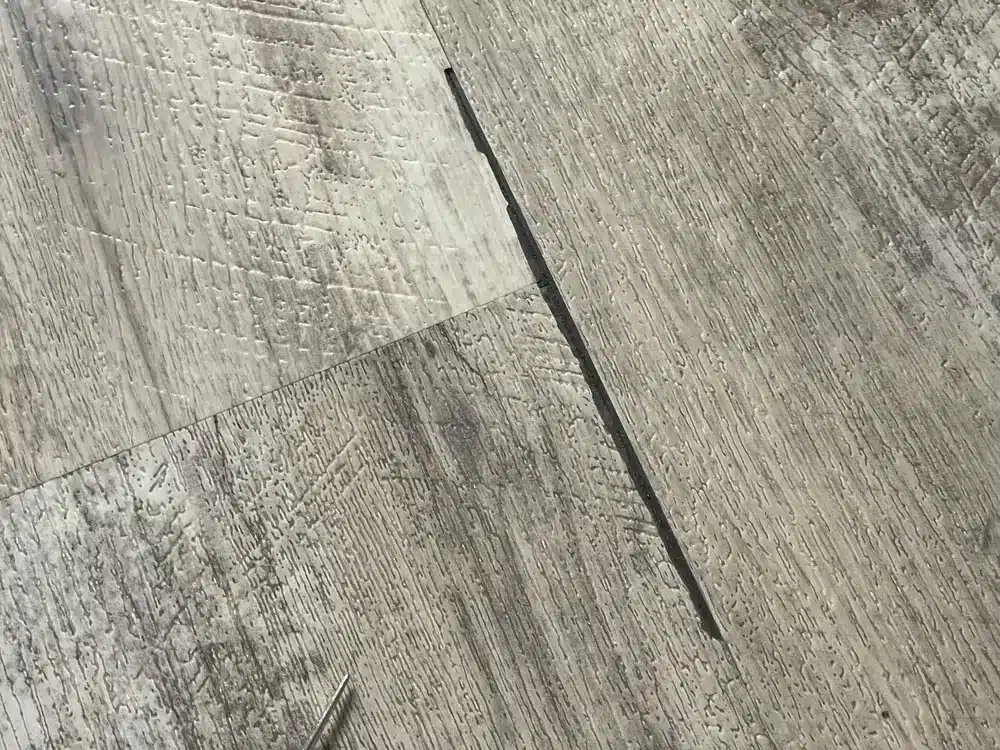
Visible chipping, fractures, raised edges, joint engagement, and retained removed material.
Site and installation context
Transitions, fixed objects, perimeter details, traffic, ambient conditions, and project records.
Photographs from actual inspections
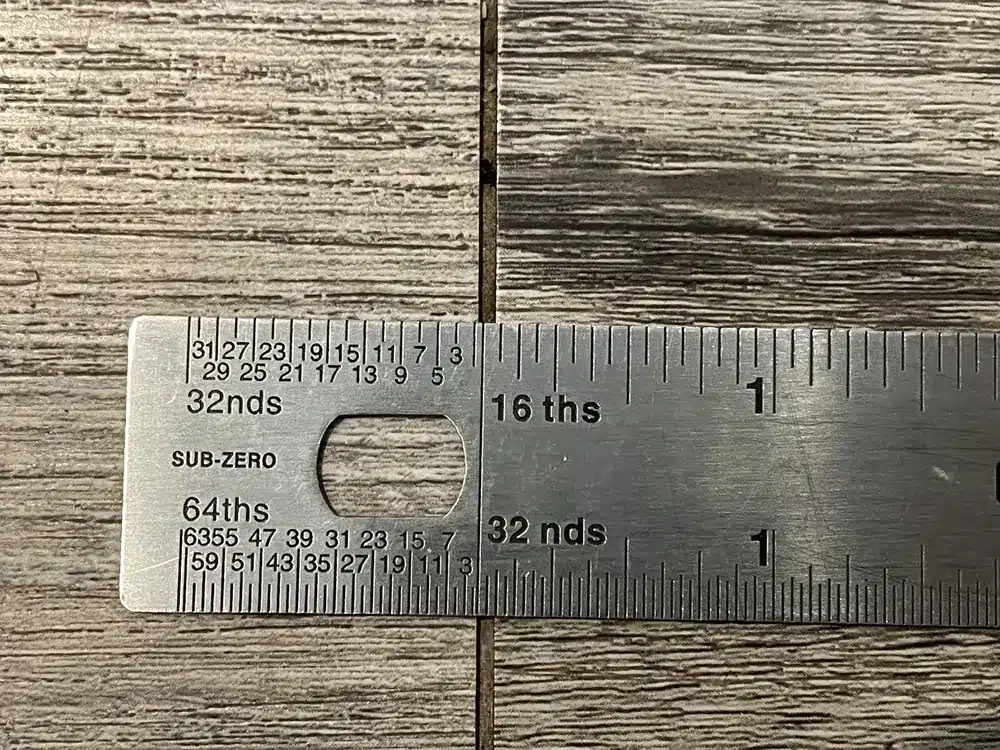
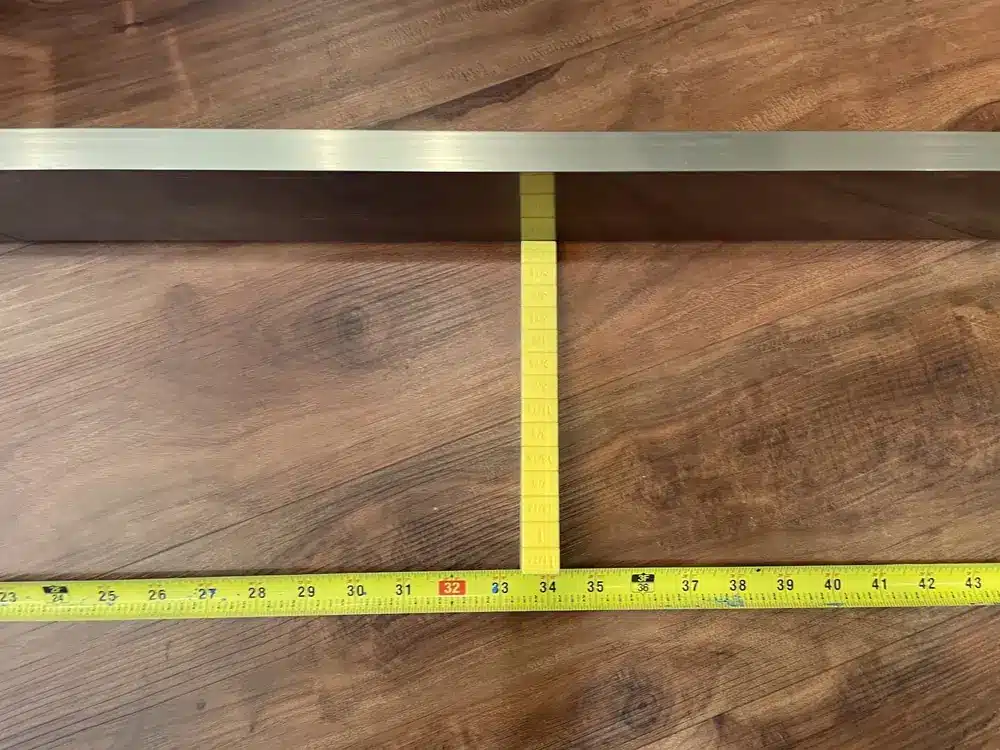
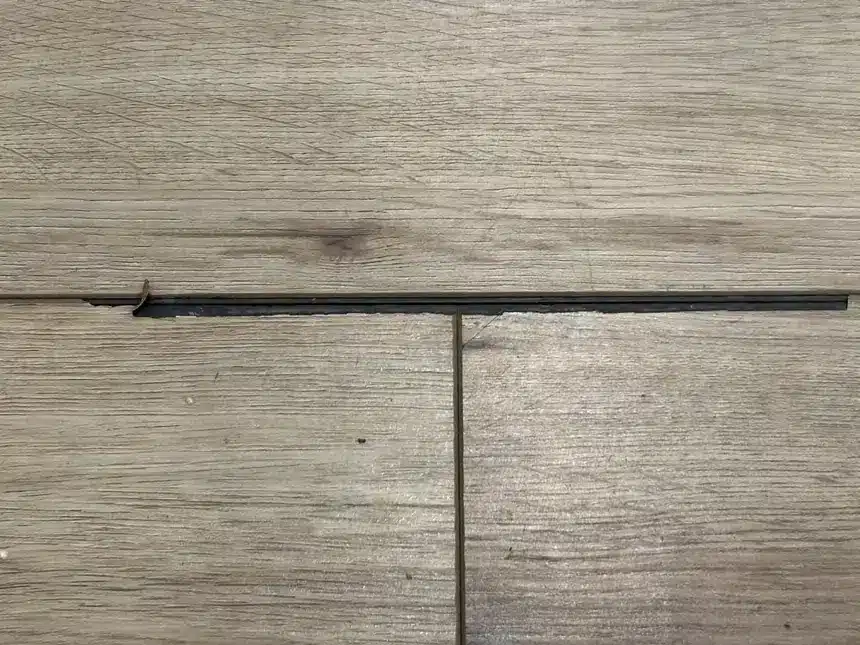
Each photograph belongs to an inspection record. Wider views, location information, measurements, and the surrounding conditions provide the context for the detail.
Prepare for the inspection
Preserve joints and removed planks
Avoid tapping joints back together or replacing affected planks solely for the inspection. If work must occur, photograph the area first. Save representative removed pieces, label their original locations, and protect locking edges from additional handling damage.
Information to collect
Gather the product name, carton labels or installation instructions, purchase and installation invoices, installation date, prior repair history, photographs showing progression, and any communications about the concern. Identify rooms and traffic patterns where damage occurs.
What the report organizes
The report brings together overall and close photographs, a location pattern, representative measurements, visible locking and edge conditions, movement or support observations, relevant site information, documents reviewed, and limitations.
Common questions
Why do LVP or LVT joints separate?
Open joints may be associated with movement, joint engagement, installation details, substrate conditions, environmental conditions, product construction, damage, or more than one factor. The site must be documented before conclusions are considered.
Why do rigid-core plank edges break?
Broken edges can be associated with support, movement, joint engagement, traffic, impact, installation details, or damage. The location and repetition of the breaks provide important context.
Should I save damaged planks?
Yes. Keep representative removed material when possible, label its original location, and avoid altering the locking profile.
What information helps confirm an LVP inspection?
Provide the property address, product details if known, affected rooms, when the condition began, photographs, and any repair deadline. Scope, travel, and pricing are then confirmed.
Tell me what is happening with the floor
Start with your contact details, the property location, and a short description of the concern. I will review the information before confirming the next step.
Call (916) 313-9224
dcraig@flooringspecialists.biz
By submitting, you ask us to contact you about this request. Privacy policy.
Submitting a request does not confirm an appointment or expert engagement. We use your information to respond to your inquiry.
Useful records and related resources
An LVP floor inspection should identify the product before applying installation requirements. Keep a carton label or purchase record that shows the manufacturer, product name, and item number. Rigid-core and flexible vinyl products may use different installation methods. A similar printed wood pattern does not establish that two products have the same construction or requirements. The report relates the observed damage and field measurements to the material that can be documented.
The Resilient Floor Covering Institute provides background on resilient flooring categories. For a view of the documented condition, see our rigid-core inspection photographs. You can also compare the flooring types guide before sending the product details with your inquiry.